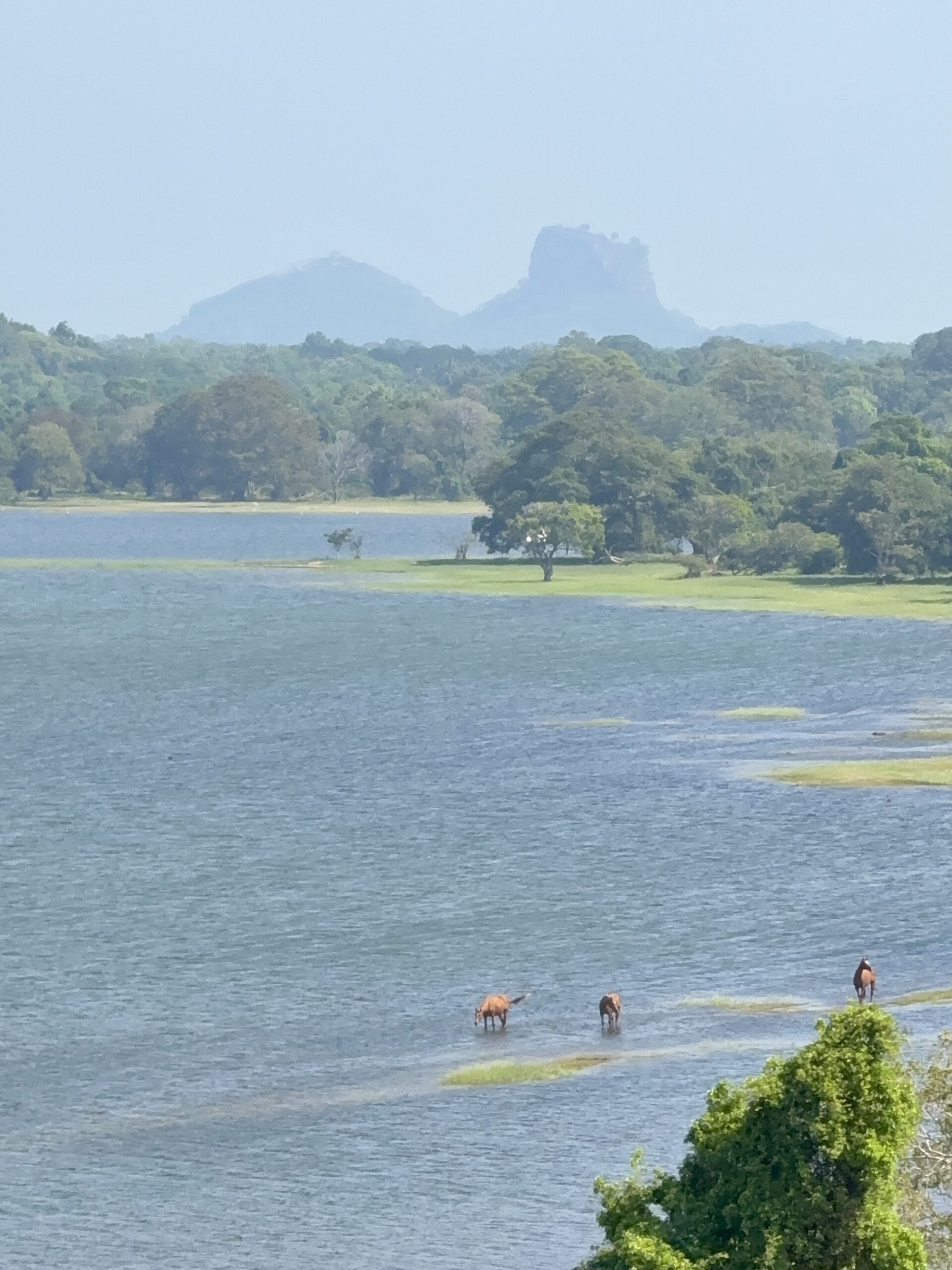
I hope you are having a great start to your 2026. Since I discovered Derek Sivers’ incredible collection of book notes many years ago, where he generously shares insights into the books he reads, I’ve been inspired to do some version of the same, starting with a few book notes myself, but over time, simply sharing what I’ve read over the course of each year along with thoughts on some standout titles. So here’s what I read in 2025.
(A note on the featured image: my favourite place to read last year, at the Heritance Kandalama Hotel, Sri Lanka, with a glorious view of the reservoir in front of the property and Sigiriya.)
Over the course of the year, I realised lots of what I read looked at systems, frameworks, architectures that lead to forms of success or failure. Good intentions and confident narratives aren’t enough to make a dent on the universe! Obvious enough, but fascinating to study through multiple lenses. Different memoirs, Buddhist texts, sci-fi, stuff written for very, very different audiences, kept bringing to light the insight that failures in individuals, business, society-at-large, the environment, are so often failures of underlying systems and incentives.
The most unsettling books on business I read were not about villains. They were about insulation in opaque, seductive bubbles of privilege. When boards put the performance of performing over actual performance, when lobbying becomes entitlement, when proximity to power replaces responsibility.
Businesses founded on genuine ideals eventually face crossroads (often more than once) where growth and values collide. Incentives, whether they’re tied to bonuses, status, or access to capital, can bring out the worst in people without any malicious intent behind their behaviour. And when checks and balances disappear, whether it be through lack of competition or lack of courage to intervene, you get priceless cautionary tales.
Books about sales management, agriculture, cooking and human potential converged on the same insight: we grow when our environments nourish us, not squeeze us. Whether coaching people over performatively managing them, letting animals (particularly livestock) self-select what their bodies need, or creating cultures where effort compounds rather than burns out, the message in these books was clear: nourishment matters more than superficial spoon-feeding.
The novels and short stories I read explained reality better than non-fiction. Stories about parallel universes, reincarnation, unknowable consciousness, and climate futures taught through feeling over fact. The future, hinted at by some books, proclaimed loudly by others, won’t have clean endings and have many trade-offs. Innovation alone won’t save us. Systems that allow, and require, humans to behave decently, are a part of our salvation too.
Other books I read dismantled the myth of the self-made individual. None of us start clean, we have many ancestors to thank for our existence, and the good, the bad and ugly. A few books that I dropped off without finishing reminded me that information alone is inert. It’s not enough to list out facts, they need to move us with narrative.
I came out of my 2025 reading with a clearer sense of how to combine some of my idealistic tendencies with a growing respect for systems that bring out the best in us while constraining the worst. Full reading list below (starred books are highly recommended), hope you find something in there that inspires you to read just a little more this year!
- The Chairman’s Lounge by Joe Aston. Thrilling investigative journalism on the rise and fall of one of Australia’s household name CEOs. A cautionary tale for leaders at all levels of an organisation and the need for good governance that stands the test of time and C-suite turnover.
- 🌟 Changing Planes by Ursula Le Guin. Fascinating short stories in which the misery of transiting in airpots can be channeled to take you to other planes of existence. Funny, insightful, thought provoking pieces that shine a light on our own weirdness.
- 🌟 Very Bad People by Patrick Alley. The founder of Global Witness reveals how corruption works, from deals to violence and important links between environmental damage and corruption. The cases featured are bold, brave, with Patrick and his comrades overcoming incredible odds to uncover the truth. The corporate world could use such courage.
- The First Time Sales Manager by Mike Weinberg. Standout lessons helpful for young managers: Hold your people accountable, help them improve at their jobs through proactive coaching, hire right, spend more time with the best people, quickly identify and address underperformance.
- The Book of Elsewhere by Keanu Reeves and China Miéville. A Cloud Atlas-esque story about an immortal being trying to understand why he keeps respawning into the world when killed, while fighting a demon pig – yes, a pig – borne of the same energy that keeps trying to hunt him down. All while being a military weapon. Subtle Buddhist undertones woven into the action and sci-fi.
- 🌟 Dirt by Bill Buford. A journalist’s adventure learning to become a French chef and understand the essence of French cuisine by moving with his wife and young boys to Lyon, the gastronomic capital of the world. Full of deep insight, entertaining stories of the characters that made the Lyonnaise restaurant scene, and a philosophical reflection on what it means to feed and be fed.
- 🌟 The Immortal Life of Henrietta Lacks by Rebecca Skloot. Possibly one of the most profound and impactful stories in human medicine and the origins of informed consent. Can’t help but feel deep gratitude for Henrietta Lacks, who unknowingly made incredible contributions to civilisation because of her cells – cancer treatments, vaccines, blood tests, etc. Incredible journalism by the author, which in and of itself is deeply inspiring.
- The Colours of All the Cattle by Alex McCall Smith. Not the strongest installation of the ‘No. 1 Ladies Detective Agency’ series, but heartwarming nonetheless, which is what I seek whenever I pick up or listen to one of these books.
- 🌟 Hidden Potential by Adam Grant. Highly, highly recommend to any learner, teacher, manager or parent.
- 🌟 The Ministry for the Future by Kim Stanley Robinson. One of the best non-fiction fiction books I’ve ever read. Eye opening, insightful, imaginative and incredibly informative on how we might fight our way out of climate change permanently.
- 🌟 Matriarch by Tina Knowles. Incredible insights into the making of the strong, resilient, creative and entrepreneurial woman who made Beyoncé. Couldn’t put it down from the moment I started listening. Can see where Beyoncé gets her hustle from, and the incredible challenges and hurdles overcome throughout her career. So much grace and courage and making the most of every opportunity.
- Orbital by Samantha Harvey.
- Virgin Millionaire by Ben Nas. Helpful personal finance principles in the Australian context, especially for young professionals starting to build momentum with their careers and incomes.
- A Very Short History of Portugal by A.H. de Oliveira Marques. One of the only books I struggled to push through, giving up halfway. Taught like history in school. Mere facts and figures. No story or context or intrigue.
- The Whole Story by John Mackay. Fastinating memoir of the journey of building Whole Foods Market by its founder, from the very early days to its sale to Amazon. Interesting lessons on business philosophy, problems of scaling healthy food, negotiation, tough conversations and brutal boardroom behaviour that eventually will find its way into almost every business.
- Empire of the Elite by Michael M Grynbaum. A tale of the business cycle from birth to decline, with cautionary tales and success stories. Standout content on Anna Wintour and her ability to stay relevant and value adding. Crazy stories about how the company was financially managed, spending lavishly with no constraints to stay culturally prestigious.
- Good Arguments by Bo Seo. We need to learn how to disagree better to create meaningful change, all while connecting more with others who see things differently to us. Mechanics but also philosophy of debate.
- Journey to Mindfulness by Bhante Gunaratne . First time I’ve read the memoir of a Buddhist monk. Showed the humanity, struggle, work of one of the most insightful minds in Buddhism. Made me see Sri Lankan cultural norms differently too.
- Nourishment by Fred Provenza. Trust living systems to self-regulate through diversity, feedback and choice, rather than controlled, simplified, forced behaviours.
- 🌟 Poor Charlie’s Almanack by Charlie Munger. So many wonderful and versatile tools by a business legend, including latticework of mental models, practical psychology, inversion, contrarianism, deep reading and thought, not being afraid to have theories without academic qualifications, and being as simple as one needs to be (but not any simpler).
- Solaris by Stanisław Lem
- Love, Loss and What We Ate by Padma Lakshmi. Beautiful memoir by the beautiful, intelligent foodie, TV host/producer and former wife of Salman Rushdie. Perfect and seamless transitions between childhood memories and her life journey, with food as the connective tissue between the two frames.
- AI 2041 by Kai-Fu Lee, Chen Qiufan. Fascinating exploration of AI’s trajectory touching on health, wealth, happiness, education and more. Slightly cringey writing when the authors attempt to place stories in countries they may have visited or read about at some point in their lives (the Sri Lanka one particularly irked me), but doesn’t take away from the ambitious material.
- 🌟 Four Foundations of Mindfulness by Bhante Gunaratne. Practical insights on Buddhism’s “Four Noble Truths” in a way I haven’t heard in decades of listening to Buddhist monks at many an almsgiving or event I’d attended in childhood.
- The Cleaners by Ken Liu.
Leave a Reply