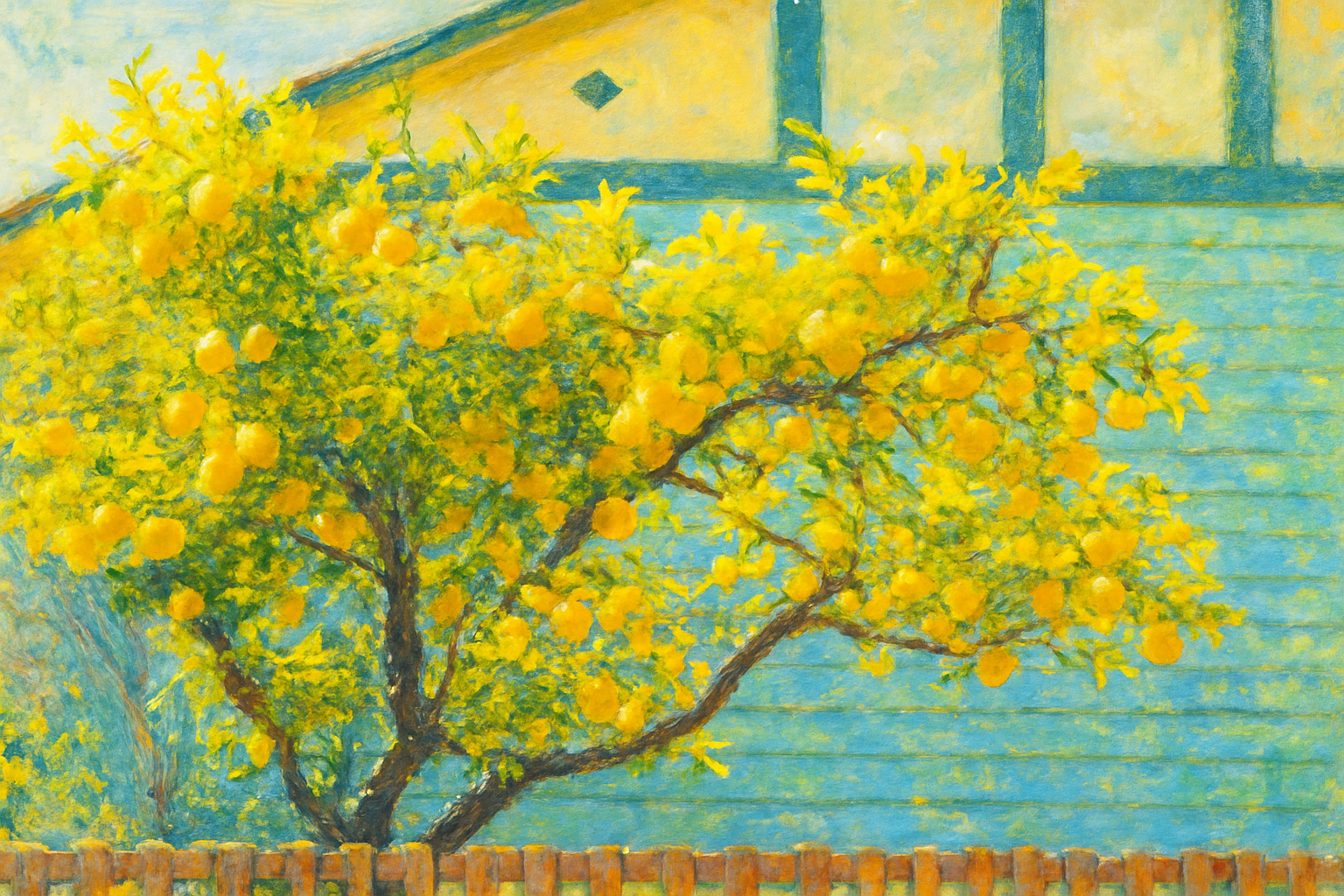
The French Impressionism exhibition at the NGV brought over a 100 works from the Museum of Fine Arts in Boston, making the perfect weekend date with a friend. I found myself less absorbed by Monet’s gorgeous lilies than by the labour behind them. Each painting was sweat equity embodied, glazed in the residue of thousands of smaller acts of creation that took effort and focus and courage – hand-ground pigments, canvasses schlepped across rugged terrain, light studied for hours to get it just right, deciding unequivocally to go against the rules of academic art.
Every field is made up of these creative acts. Da Vinci filled thousands of pages with restless sketches, asking and attempting to answer questions no one else thought to ask. Geoffrey Bawa, Sri Lanka’s famous father of tropical modernism, didn’t even study architecture until his thirties, but acting on his lifelong curiosity eventually spawned buildings where nature and concrete intermingled to the most pleasing, sensual effect, like here, here, and here.
Discipline, of course, is the throughline across all iconic works and their creators. Gabriel García Márquez wrote from morning to night in the final year of writing One Hundred Years of Solitude, using journalistic rigor (the kind found in the 20th century) to anchor his magical realism to truth. Haruki Murakami writes like he trains for marathons – same hours, same laps, building endurance that churned out Norwegian Wood and 1Q84. A.R. Rahman composes while Chennai sleeps, chasing melodies until the sun rises.
For some, scaling is the artistic medium. Gordon Ramsay and Luke Nguyen multiply themselves through restaurants, multitudes of books and TV shows. José Andrés says that “real work comes when you pass your comfort zone”, urgency his fuel, whether plating intricate dishes for degustation or feeding Haiti and Gaza in the midst of unimaginable suffering and an unbelievable scarcity of food and water through his World Central Kitchen
Not every act of creation is loud. Y Combinator’s Paul Graham great work begins by chasing your curiosity—trying lots of ideas quickly, discarding most, and noticing which ones refuse to leave your mind. The great, late, Quincy Jones thrived on breadth, moving from Frank Sinatra to Donna Summer to Michael Jackson, Bossa Nova to film scores, treating variety as rocket fuel for creativity. Rick Rubin (probably the biggest force in contemporary western music you’ve never heard of) takes the opposite tack: silence, long listening, waiting for the right notes to drift in.
The contrast matters because today, the vast majority of us rarely give ourselves either – the sprint or the stillness (or, dare I say, boredom). A few quiet minutes on the train feel unbearable without music or a podcast. We constantly consume but ever so rarely make. But closing the gap between consumption and creation is how life is well lived.
Creation doesn’t mean masterpieces every time! It begins and remains small almost all of the time: one thought in a journal, a hurried after-work meal using whatever’s left in the fridge and pantry, planting mint in a tiny pot. They’re bodyweight exercises for the imagination muscles. As Maya Angelou brilliantly said “you can’t use up creativity. The more you use, the more you have”.
No doubt there’s inertia in us mere mortals. For me, making feels like swimming through honey – slow, sticky, exhausting. But with each draft, each pie baked, each after hours session at the piano, the honey warms, thins, and suddenly movement feels natural. Creativity leaks across borders – time in the kitchen sharpens writing, time at the piano shapes my slides at work.
The point isn’t perfection, but reps to build muscle for when it matters. And the act of making is itself clarifying, joyful, and an antidote to the dullness we feel without our devices. Jazz musician Esperanza Spalding improvises with life as her instrument. Maybe that’s the point – the more we create, the less the outcome matters. The act itself becomes the music, and sometimes, if we’re lucky, the world hums along.
Leave a Reply