Featured image credit: FotoNoir

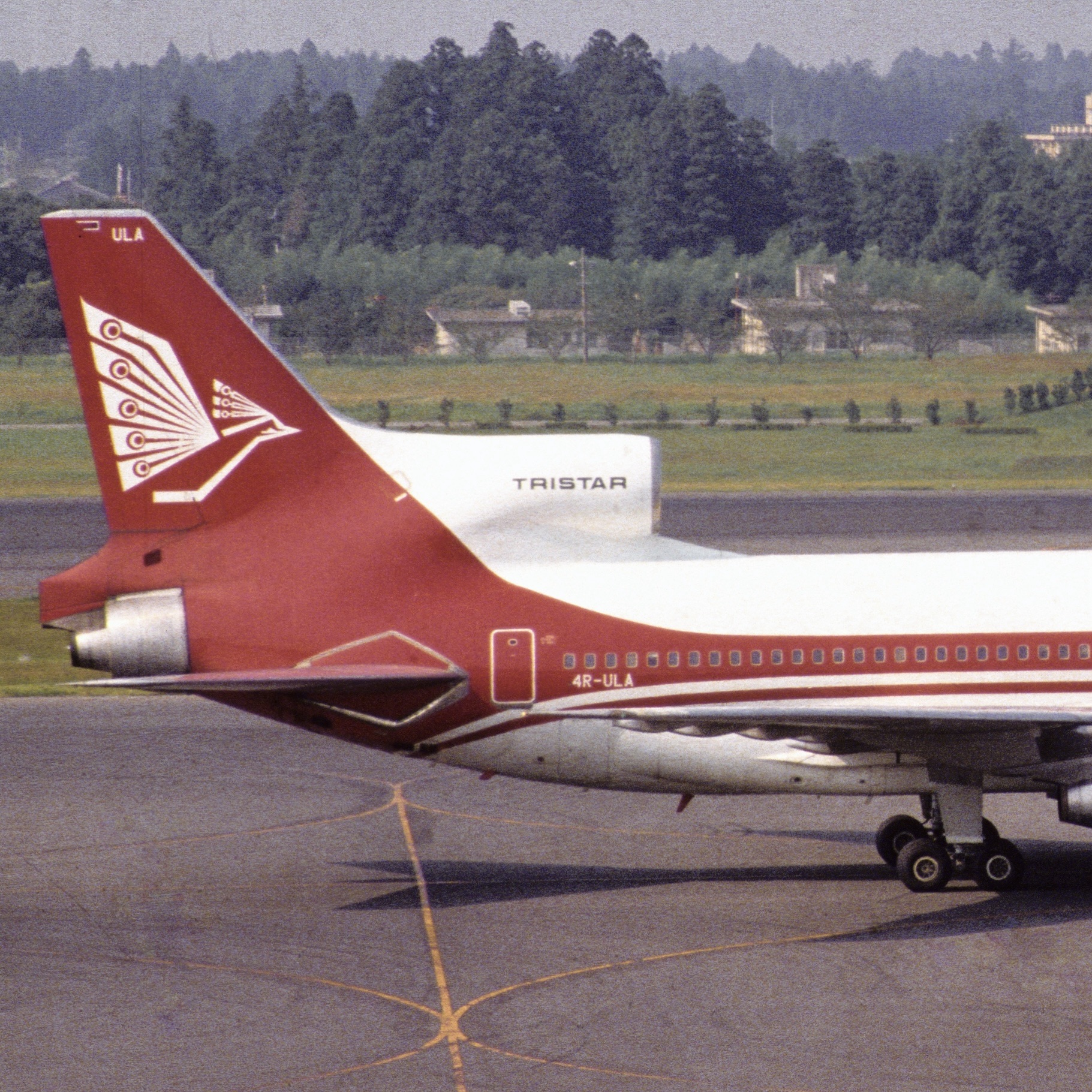
Air Lanka’s Lockheed L-1011 TriStars were the aircraft that first pulled me into the orbit of commercial aviation. I flew on them almost every summer holiday between Riyadh, where I grew up, and Colombo, where our friends and relatives lived, from 1995 until the fleet was replaced by brand-new fly-by-wire A330s in the late 1990s. I remember the wide cabins, the impossibly cool S-duct third engine, and the pre-9/11 cockpit visits where pilots, recognising their own childhood awe in mine, walked me through the controls with kindness and pride.
Strip away the nostalgia and the inner six-year-old, and the verdict still stands: the L-1011 was arguably the best widebody of its era — and far too ahead of the curve. It was the first aircraft of its kind to land itself in near-zero visibility. It reduced pilot workload through sophisticated flight controls and safety systems. It was quieter, more comfortable, more refined than its rival.
That rival, the Douglas DC-10, was by many technical measures the inferior machine.
But it arrived first. In the end, only about 250 TriStars were built. The DC-10 delivered close to 450. The L-1011 programme sputtered to an end in just over a decade. The DC-10 kept evolving well into the 90s.
The TriStar leaves us with an uncomfortable truth: a great product is built as much on finance, risk management, sales strategy, and structural resilience as it is on engineering brilliance. In multi-billion-dollar bets, the invisible elements are not secondary — they are existential. Innovation at any cost is failure waiting to happen. Risk does not disappear because we refuse to stare at it. And ambition without humility is a dangerous mix — especially when success in one arena (defence contracting, in Lockheed’s case) is assumed to transfer seamlessly into another.
That lesson feels eerily relevant in an era that rewards audacity — especially in AI — with almost delirious enthusiasm.
The invisible work
We reward spectacle and ignore plumbing. The TriStar dazzled. And it died because of cash flow strain, single-supplier fragility, and timing.
With Lockheed pursuing engineering perfection, they failed to design redundancy into critical elements of its development, relying on a single engine programme with Rolls Royce (the eventually game-changing RB211). They underestimated how aggressively the DC-10 would be marketed and sold. There was no meaningful Plan B baked into the strategy, no Version 1 that satisfied the market while hedging their technological and supplier concentration risk. A product doesn’t need to be perfect to success, it needs to be viable, able to make money, and ship on time. If you can’t scale these invisible bits, the visible won’t matter.
The 1970s were a period of enormous ambition in aviation. Deregulation reshaped the industry. Airlines with big dreams sprouted across continents. Lockheed, steeped in defence culture, leaned on its reputation and engineering pedigree.
Meanwhile, the DC-10 entered service a year earlier, in 1971. It too had three engines, positioned as a more efficient alternative to the fuel-hungry Boeing 747 dominating long-haul routes. It lacked the elegance of the TriStar, but it offered airlines two engine suppliers to choose from, aggressive financing, and earlier delivery slots. It secured major carriers in the United States and Europe.
Those boring foundations — contracts, financing, distribution, risk management — are rarely celebrated. But they allow bold ideas to survive long enough to matter. The MD-11, the DC-10’s successor, still flies today as a cargo workhorse for FedEx and UPS.
The Cost of Concentration Risk
The fatal error was not simply choosing one engine supplier. It was choosing one path to victory.
The TriStar had no meaningful redundancy. No diversified hedges. No deliberate downside minimisation in proportion to the scale of risk. When you pursue high-risk innovation, concentration becomes lethal.
Lockheed could have reduced exposure through earlier and deeper customer financing structures. They could have explored parallel engine partnerships. They could have been developing a twin-engine future as propulsion technology advanced. They could have hedged against inevitable shocks in a cyclical, capital-heavy industry.
Instead, the strategy assumed that technical superiority would trump any delivery delays. This is not only an aviation lesson. Optionality is not inefficiency. It is resilience. When the stakes are existential, hedge early.
“Best” is contextual.
In consumer technology, “best” may mean ecosystem integration and user delight. In aviation, “best” often means cost per seat mile, reliability, fleet commonality, financing support, and predictable delivery timelines.
I remember pilots telling me how much they loved flying the L-1011. But pilot admiration was not the product’s objective. Airlines needed a cheaper alternative to the 747 at a pivotal moment — during deregulation, oil shocks, and global economic shifts. They needed flexibility, cost discipline, and manageable risk.
The TriStar may have been technologically superior. But it did not fully align with the buying criteria that actually close orders.
How were these insights missed?
Not necessarily from a lack of intelligence — but perhaps from overconfidence. From assuming that ambition and technical excellence would align naturally with market forces. From hoping to ride the big bang of deregulation and expansion of the aviation universe without fully internalising the volatility of fuel prices, competition, and macroeconomics that would have translated into a more aggressive, life-or-death sales strategy.
Innovation must be staged. “Best” should sometimes mean good enough to enter the arena sustainably — not perfect at the cost of survival. Innovation cannot progress beyond its first breakthrough if it collapses under its own weight.
The counterfactual
Imagining TriStar as a commercial success is a thought experiment in discipline. What it could have looked like:
- Launch with at least two engine options.
- Front-load aggressive sales to secure the first 100–200 frames, even at painful margins, to build learning curves and credibility.
- Ship a safe, viable version early; iterate toward perfection.
- Develop a twin-engine pipeline in anticipation of evolving economics.
- Secure long-term financing structured to withstand years of losses.
- Expect major macro shocks – such as oil shocks that hit in 1973 and surging inflation that reshaped aviation economics in the 70s – because commercial aircraft live across decades.
Invisible work matters in transformative technology. Legal structures. Supply chains. Distribution models. Financing. Marketing momentum. These shape the world more than the headline features do.
In other industries, we see different risk architectures at play. Apple, with its multiple profit engines can afford to iterate on ambitious but unproven products like the Vision Pro. Beyoncé worked for decades on building massive global audiences before she could afford to drop albums with zero promotion or build-up. TMSC, which makes the world’s most advanced chips, does not scale innovation without first securing the capital, customers and buffers to handle shocks.
Where boring is good
There is a case for boring excellence where it counts. There is a case for satisficing — for getting an idea into the world satisfactorily rather than perfectly. And there’s the skill of being ambitious without arrogance, maintaining beginner’s mind while pursuing scale and experience.
I wonder what global aviation might look like if Lockheed had survived in commercial aviation. What additional innovation might have emerged. What new machines might have awed the child I once was. The L-1011 remains one of the most beautiful aircraft ever built. Its story is not a cautionary tale against ambition. It is a warning against ambition without buffers and the humility to build world-astonishing things one survivable step at a time.
Further Reading:
The Sporty Game by John Newhouse
Leave a Reply